A Union Query Is Which of the Following
A union query is which of the following a combines. Uses the result of an outer query to determine the processing of an inner query.

The Except And Intersect Operators In Sql Server Sql Server Sql Intersecting
First the number and the orders of columns that appear in all SELECT statements must be the same.
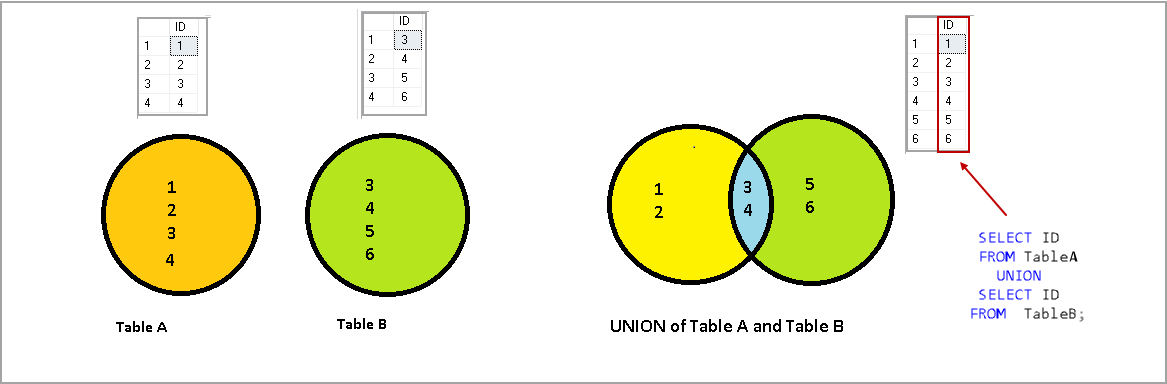
. All the queries in a UNION must be against the same table. Uses the result of an inner query to determine the processing of an outer query. The following are the basic rules for SQL Server Union operator.
SELECT CustomersCompany CustomersLast Name CustomersFirst Name FROM Customers UNION SELECT SuppliersCompany SuppliersLast Name SuppliersFirst Name FROM Suppliers ORDER BY Last Name First Name. The SQL Union operator is used to combine the result set of two or more SELECT statements into a single result set. The number of columns must be the same in all the queries.
B Combines the output from multiple queries and must include the same number of columns. The final SQL that combines and sorts the names for this union query example is the following. The UNION operator selects only distinct values by default.
Combines the output from no more than two queries and must include the same number of columns. Uses the result of an inner query to determine the processing of an inner query. A UNION query combines the output from multiple queries and must include the same number of columns.
The Union operator combines the results of two or more queries into a single result set that includes all the rows that belong to all queries in the Union. Combines the output from multiple queries and must include the same number of columns. To allow duplicate values use UNION ALL.
UNION clause is used to subtract rows of second query from the first query. 18A union query is which of the following. Combines the output from no more than two queries and does not include the same number of columns.
A UNION query is which of the following. The arranging of data in a logical sequence is called. Choose the best query to run in Impala to return the distinct union of the columns zip_plus_4 type STRING has values like 94306-0001 in the california_emp table and zip type INT has values like 94105 in the california_offices table.
Combines the output from multiple queries and must include the same number of columns. Combines the output from no more than two queries and must include the same number of columns. Question is A UNION query is which of the following Options are A Combines the output from no more than two queries and must include the same number of columns B Combines the output from no more than two queries and does not include the same number of columns C Combines the output from multiple queries and must include the same number of columns.
A UNION query is which of the following. Combines the output from no more than two queries and does not include the same number of columns. A Combines the output from no more than two queries and must include the same number of columns b Combines the output from no more than two queries and does not include the same number of columns c Combines the output from multiple queries and must include the same number of columns.
By default the UNION. Analyst Database Administration IT Trainer. The column names in the result-set are usually equal to the column names in the first SELECT statement.
Union operator will select all the distinct records from all queries by removing the duplicate rows. Set operators are used to combine the results of two or more SELECT statementsValid set operators in Oracle 11g are UNION UNION ALL INTERSECT and MINUSWhen used with two SELECT statements the UNION set operator returns the results of. Combines the output from no more than two queries and must include the same number of columns.
Combines the output from multiple queries and must include the same number of columns. The UNION operator is used for combining the results of various SELECT queries into one. Combines the output from multiple queries and does not include the same number of columns.
A UNION query is which of the following. Second the data types of columns must be the same or compatible. SELECT column_name s FROM table1.
SELECT column_name s FROM table2. A UNION query is which of the following. Which of the following is a correlated subquery.
Combines the output from no more than two queries and does not include the same number of columns. Each query in a UNION can be sorted independently in different sort orders. In simple terms it combines the two or more row sets and keeps duplicates.
1Which SET operator does the following figure indicate. UNION EXCEPT INTERSECT AND. Combines the output from no more than two queries and must include the same number of columns.
SQL Structured Query Language sql To combine result set of two or more queries using the UNION operator these are the basic rules that you must follow. UNION and UNION ALL give same result if the participating queries are mutually exclusive. Which of the following will combine the results of two or more queries into a resulting single set that includes all the rows belonging to the query.
Combines the output from no more than two queries and must include the same number of columns. For example SELECT a FROM table1 UNION SELECT a FROM table2. This SQL operator follows the same rules as the UNION operator except for the use of the UNION ALL keyword instead of the UNION keyword in the syntax.
For example if we want the list of all cities including duplicates from our Employee_dept and Manager tables well use the following query. Combines the output from multiple queries and. Combines the output from multiple queries and must include the same number of columns.
79 A UNION query is which of the following. Combines the output from no more than two queries and does not include the same number of columns C. An Union query combine the output from multiple queries and must include the same number of columns means Union query says that same no and type of column must be provided in select statement.
Which of the following returns all distinct rows selected by either query. Produces the results from tables table1 concatenated with that of table2. Combines the output from no more than two queries and does not include the same number of columns.
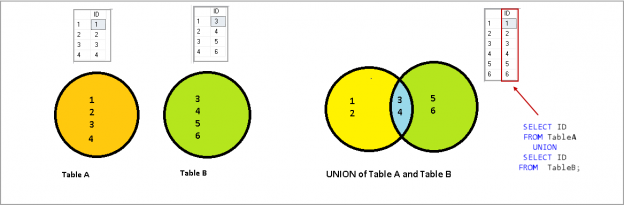
For example the table A has 12 and 3 and the table B has 345.

Dynamic M Query Parameters In Power Bi Desktop Preview Power Bi Microsoft Docs Power Query Parameter
Sql Union Vs Union All In Sql Server
Sql Union Vs Union All In Sql Server
Comments
Post a Comment